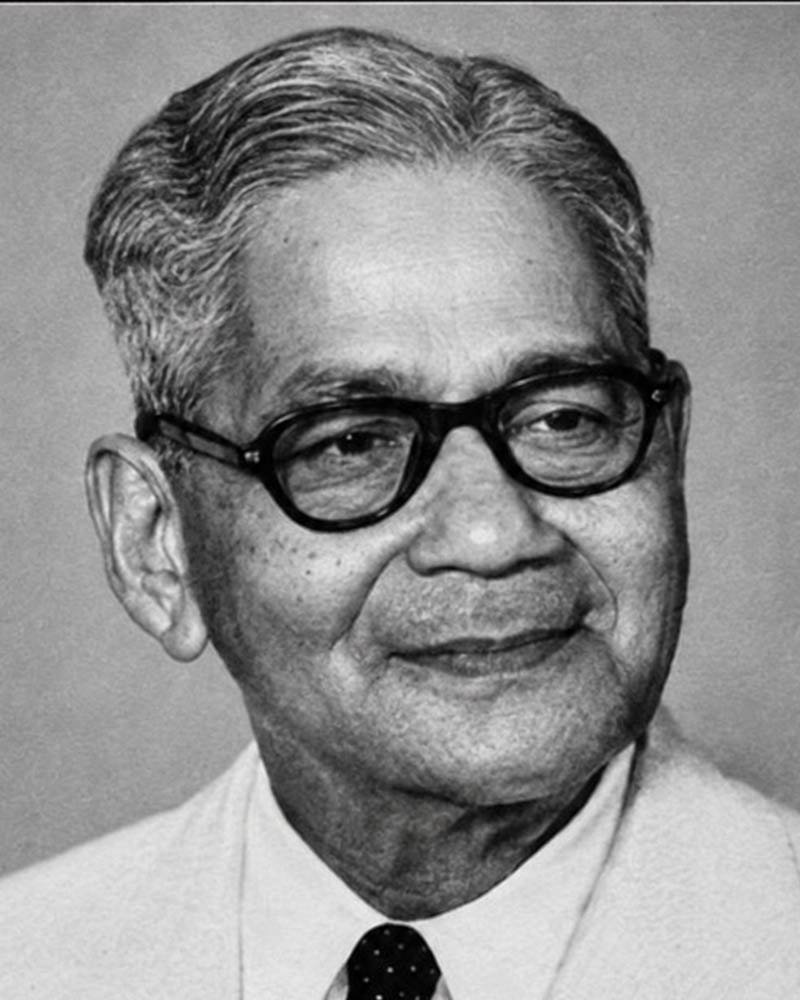
Prof. Biraj Mohan Das (1885–1956) was a pioneering scientist, institution-builder, and visionary who laid the foundation of modern leather science and technology in India. Widely revered as the "Father of Indian Leather Science" and the "Father of the Modern Tanning Industry in India", he was the first Indian leather technologist to earn a foreign degree, a co-originator of the Das–Stiasny theory of chrome tanning, the founder of the Calcutta Research Tannery (which evolved into GCELT), the founder of the Indian Leather Technologists’ Association (ILTA), and the first Director of the Central Leather Research Institute (CLRI). This article traces his life from his birth in Faridpur through his education at Presidency College and Leeds University, his industrial career at the National Tannery, his institutional contributions, and his enduring legacy in the Indian leather industry.
Early Life and Education
Prof. Biraj Mohan Das was born in 1885 at Brahmandi, a village in Faridpur (now in Bangladesh). He had his early education at Faridpur Zilla School, obtained his Bachelor’s degree from Cooch Bihar Victoria College, and secured a Master’s degree in Chemistry from Presidency College, Calcutta. He achieved First Class First in M.A. in Chemistry in 1907.
His brilliance caught the attention of Acharya P.C. Roy, the eminent chemist and Head of the Chemistry Department at Presidency College, who facilitated Das’s entry into the Bengal Chemical and Pharmaceutical Works, India’s pioneering chemical enterprise. Under Acharya Roy’s mentorship, the young Das developed a simplified process for manufacturing commercial sulphuric acid.
Recognising his potential, Sir Ashutosh Mukherjee, the eminent educationist and reformer, awarded him the Guru Prasanna Ghosh Scholarship to study Leather Chemistry and Technology at Leeds University, UK, in 1909. There he earned his M.Sc. degree in 1911 with distinction. He was trained under the legendary leather scientist Prof. Procter and became a co-originator of the Das–Stiasny theory of chrome tanning. He was the first Indian leather technologist to earn a foreign degree.
Driven by a deep commitment to apply scientific knowledge to industrial practice, Prof. Das travelled to Germany and Italy to gain hands-on experience in leather technology. He worked with Friedrich Bayer in Germany and further honed his skills in Italy, even acquiring fluency in German and Italian.
Career and Industrial Contributions
Prof. Das returned to India in 1914, just before the onset of World War I. A Swadeshi to the core, he joined Sir Nilratan Sarkar at the National Tannery, Calcutta, the first chrome tannery in eastern India. It was with the capital of Nilratan Sarkar, the diligence of Surendranath Roy, and the technical knowledge of B.M. Das that the National Tannery made rapid progress.
At the National Tannery, Das served as Manager, earning Rs. 100 per month, while his two technical assistants, both from the middle class, earned Rs. 75 each. The concern encountered serious difficulties in obtaining hides and faced foreign competition, but Das’s technical expertise enabled the tannery to introduce chrome tanning, marking a qualitative change in Bengal’s leather industry. The tannery employed 100 workers, of whom 50 were in tanning and the rest in boot-making. Notably, the concern operated with an absence of any foreign experts.
Founding of the Calcutta Research Tannery
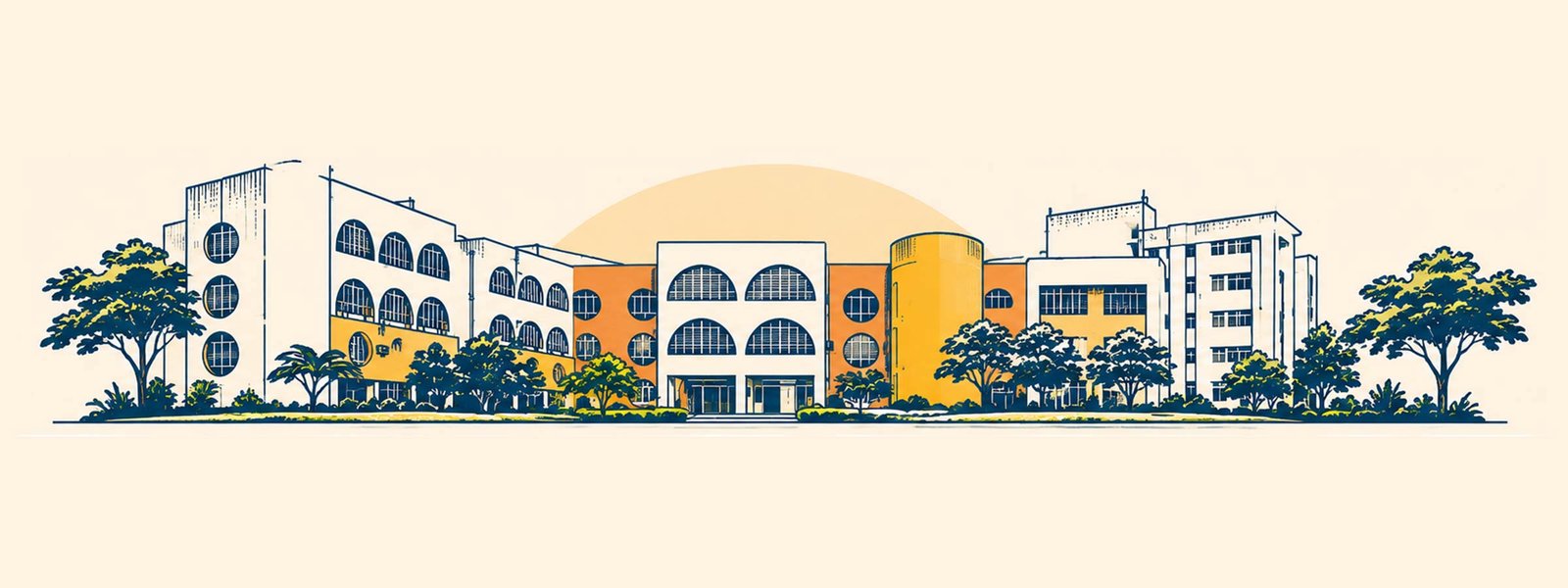
The establishment of the Calcutta Research Tannery in 1919 alongside the National Tannery enabled Prof. Das to serve both organisations with great dedication. The Tannery was founded on the recommendation of the Munitions Board after World War I to use indigenous resources of hides, skins, and tanning materials for producing leather goods and developing the leather industry in India. In 1924, the Calcutta Research Tannery blossomed into the Bengal Tanning Institute, which was formally renamed in 1926. This institution, through its subsequent incarnations as the College of Leather Technology and ultimately the Government College of Engineering and Leather Technology (GCELT), stands as Prof. Das’s most enduring institutional legacy.
Superintendent of the Bengal Tanning Institute
Prof. Das was whole-time Superintendent of the Bengal Tanning Institute from 1934 to 1945. During this period, he was given the military rank of Colonel and deputed as an Expert in Leather Technology with the British Intelligence Objective Committee. He wrote the Bois Report, running into several pages, entirely from memory, based on what he observed during his visits to Germany during the War. The report was a depository of information in such detail and depth that it was described as "a remarkable encyclopedia for a student of science to learn from".
Introduction of Commercial Chrome Tanning
Prof. Das was instrumental in introducing for the first time the commercial chrome tanning in India and was mainly responsible for placing the Indian tanning industry as a whole on a more scientific basis.
Founding of ILTA and CLRI
Indian Leather Technologists’ Association (ILTA)
After his retirement, Prof. Das served as an Adviser to the West Bengal government and was instrumental in the formation of the Indian Leather Technologists’ Association (ILTA) in 1950. ILTA was founded on 14th August 1950, with Prof. Das serving as its Founder President. The Association was created to advance education, research, and professional fraternity in leather technology.
Central Leather Research Institute (CLRI)
Prof. Das was appointed as Officer on Special Duty at CLRI in 1951 and joined as the first Director of the Central Leather Research Institute (CLRI) in 1953. Under his leadership, CLRI grew to become one of the world’s largest research institutions in leather technology. In the words of Dr. A.L. Mudaliar, former Vice Chancellor of Madras University, Prof. Das "made the institute equal to any other international institute that had been established".
The Anecdote of Sir C.V. Raman
A memorable anecdote illustrates Prof. Das’s unwavering commitment to leather science. At the inauguration of the CLRI building in 1953, Sir C.V. Raman lamented that it was a shame that an institute for leather research was being inaugurated at Madras rather than an institute for high sciences like biology. Prof. B.M. Das is said to have touched the feet of Sir C.V. Raman on the dais and said, "But for leather, what would have happened to the feet of Sir C.V. Raman?". Such was his commitment to and belief in science for leather.
Research and Publications
Prof. Das authored numerous research papers and bulletins. His work covered diverse aspects of leather science:
- "Leather: An Important Material for Defence" (1954), published in the Defence Science Journal, Vol. 4, No. 3, pp. 107–121
- "Some Aspects of Leather Manufacture"
- "Recovery of Chrome from Waste Chrome Liquors" (1955)
- "Physical and Chemical Characteristics of Some Indian Leathers", Parts I and II
- "Studies in Chrome Tanning", Part II: Determination of Basicity of Chrome Liquors
- "Proposed Microscopical Specifications for Indian Sole Leather"
- "Sulphation of Tobacco Seed: A Note" (1956)
- "Neutral Salt Effect in Semi-Chrome Tanning"
He also organised the first-ever symposium on leather technology in India, marking a historic milestone in the industry’s academic and technical evolution.
Legacy and Memorial
Prof. Das passed away in 1956. His legacy is commemorated through multiple institutions and awards:
B.M. Das Memorial Lecture (CLRI)
The Director and Staff of CLRI instituted the Prof. B.M. Das Memorial Lecture as a feature of the Tanners Get Together (TGT), which later transformed into the Leather Research Industry Get-together (LERIG). The lecture series began in 1963, with B.C. Guha delivering the first lecture. Over the decades, distinguished scientists from around the world have delivered the lecture, including Dr. T. Ramasami (2013), Dr. R.A. Mashelkar (1998), Dr. A.D. Covington (2000), and Dr. Campbell T. Page (2005).
B.M. Das Memorial Lecture (ILTA)
Since 1970, ILTA has commemorated its Foundation Day each year on 14th August with the B.M. Das Memorial Lecture, delivered by distinguished personalities in the field.
B.M. Das Memorial Medal
A B.M. Das Memorial Medal is awarded to students for securing 1st Class 1st Position in B.Tech at GCELT. Prof. B.M. Das Memorial Gold Medals are also presented at ILTA functions.
Statue
A statue of Prof. B.M. Das stands as a tribute to the "father figure of modern tanning industry in India".
Conclusion
Prof. Biraj Mohan Das was more than a scientist; he was an architect of an industry and an institution-builder of the highest order. His textbook legacy lives on in the generations of leather technologists trained at the institution he founded. His research on chrome tanning transformed India’s tanning industry from a traditional craft into a modern science. His vision created ILTA and CLRI, two institutions that continue to serve the leather community. As the tribute at CLRI aptly states, "He truly was the man who painted the horizon for leather sector in India. He was an architect par excellence for the present edifice of Indian leather".
Sources
- CLRI, "Tribute to a legendary, BM Das," Leather Research Industry Get-together (LERIG) 2013.
- ILTA, "Prof. B. M. Das Memorial Lecture," Indian Leather Technologists’ Association.
- Wikipedia, "Government College of Engineering and Leather Technology."
- CLRI, "Prof BM Das (1885–1956)," About B.M. Das Lecture.
- Swadeshi Enterprise in Bengal, 1900–1920, Chapter on "Surendra Nath Roy and Rai Bahadur Biraj Mohan Das," Digital Library of India.
- ILTA, "Our Organization," Indian Leather Technologists’ Association.
- CLRI, "Bulletin of the Central Leather Research Institute (1954–1962)."
- CSIR-CLRI, "BM Das Lectures," Central Leather Research Institute.